

The Living Delta
Expeditions & Wildlife
Step into one of the world's last great wilderness frontiers — where Bengal tigers swim between islands, 300 bird species fill the canopy, and every tide reveals a new secret.
Where the jungle meets the sea
The Sundarbans is the world's largest mangrove delta — a UNESCO World Heritage Site and Ramsar Wetland of International Importance. Spanning 10,000 sq km across India and Bangladesh, it is the only mangrove forest on earth where Royal Bengal tigers roam freely.
Duikonya's expeditions are led by Ronny Anthony, a naturalist with over 15 years of deep-forest experience. Every journey is small-group, unhurried, and guided by genuine ecological knowledge — not a packaged tour.
Wildlife of the Sundarbans
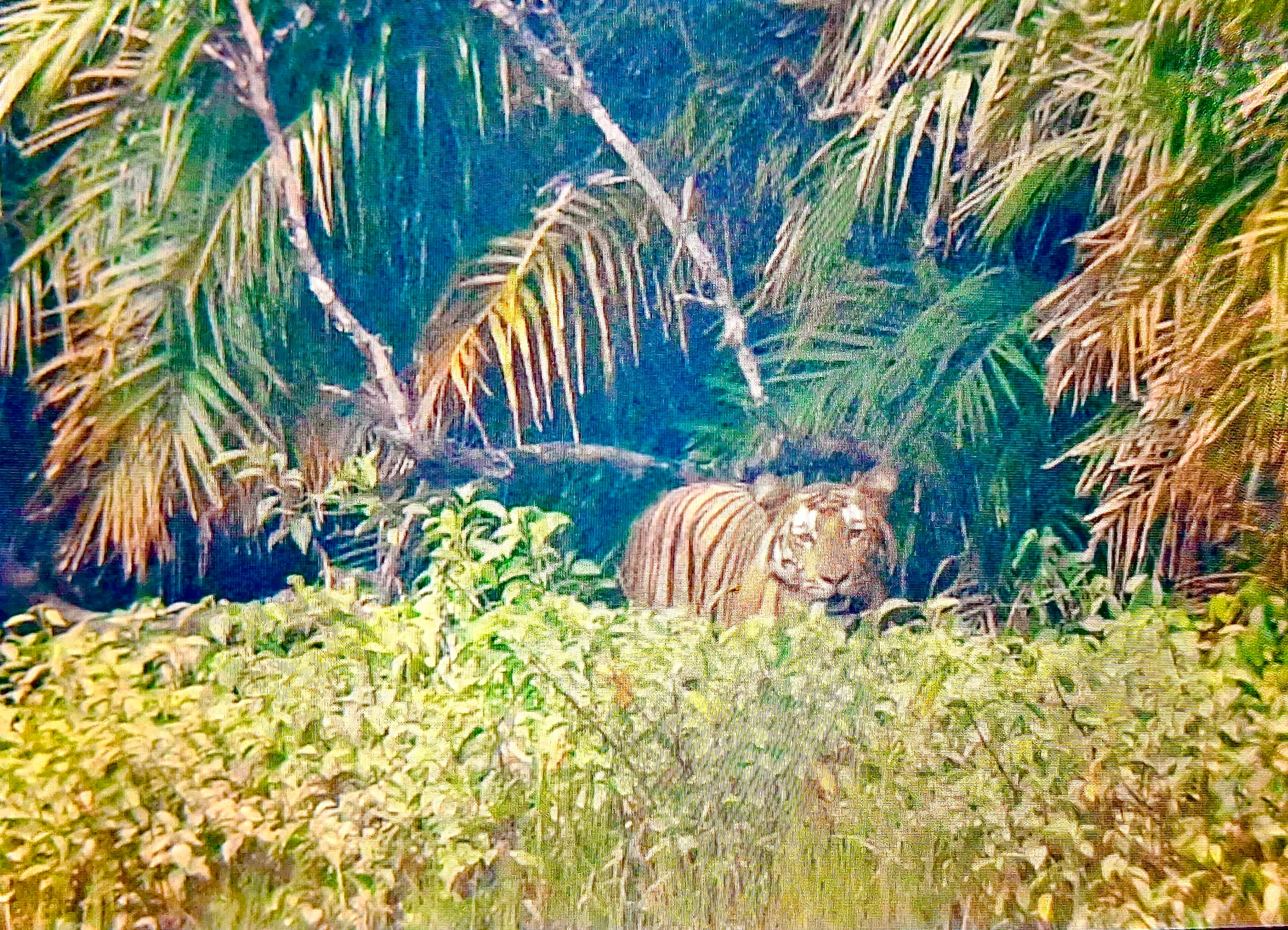
Royal Bengal Tiger
Panthera tigris tigris
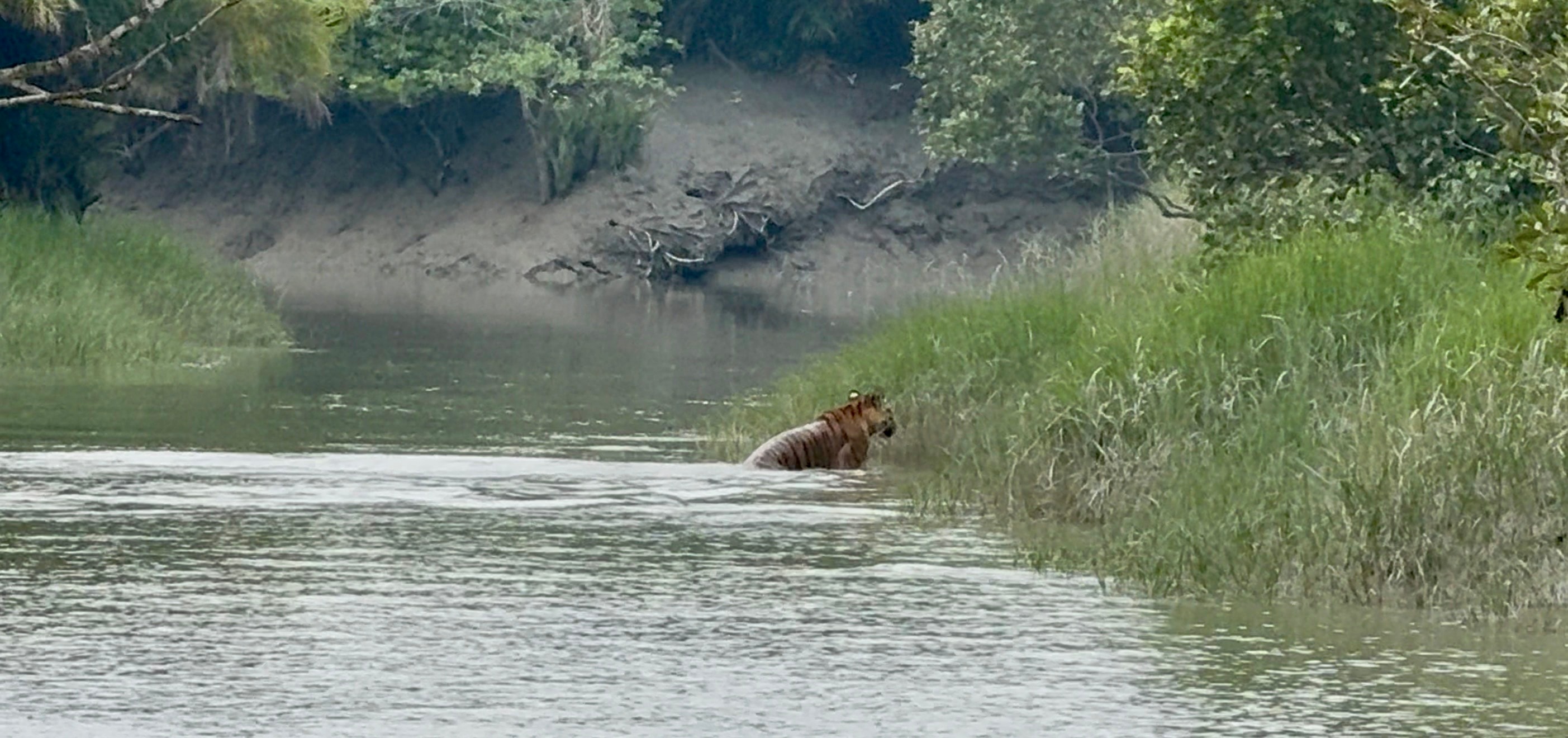
The Sundarbans tiger is uniquely adapted to a semi-aquatic life — known to swim kilometres between islands. Sightings are rare and deeply memorable. Our guides know the tidal rhythms and forest corridors that maximise your chances.
- ›Only tigers known to swim regularly in salt water
- ›Estimated 96 individuals in Indian Sundarbans
- ›Best sighted at dawn along creek banks
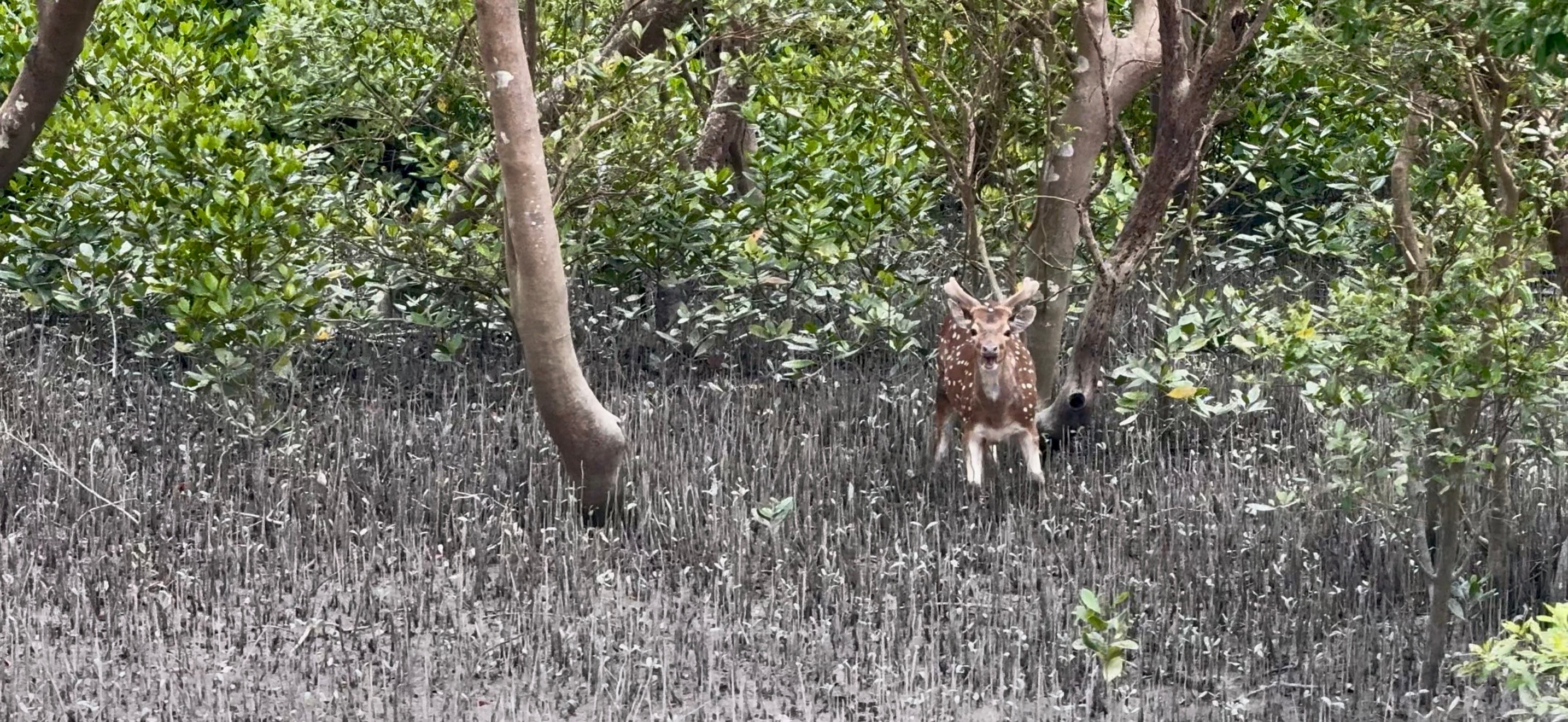
Spotted Deer (Chital)
Axis axis
The most commonly sighted large mammal in the Sundarbans. Chital herds graze along the forest edges and serve as the primary prey base for tigers. Their alarm calls are often the first sign of a predator nearby.
- ›Primary prey species for Bengal tigers
- ›Herds of 20–100 individuals common
- ›Most active at dawn and dusk

Saltwater Crocodile
Crocodylus porosus
The world's largest living reptile is a resident of Sundarbans waterways. Estuarine crocodiles bask on mudflats and are regularly spotted from our boats — a thrilling encounter from a safe distance.
- ›World's largest living reptile
- ›Can exceed 6 metres in length
- ›Frequently spotted on mudflats at low tide
Irrawaddy Dolphin
Orcaella brevirostris
The Sundarbans rivers are home to the endangered Irrawaddy dolphin — a blunt-nosed, cooperative hunter that sometimes works alongside fishermen. Spotting one surfacing in the golden morning light is unforgettable.
- ›Critically endangered globally
- ›Cooperative fishing behaviour observed
- ›Best spotted in wider river channels at dawn
A Birdwatcher's Paradise
With over 300 recorded species, the Sundarbans is one of India's premier birdwatching destinations. From the electric flash of a kingfisher to the soaring silhouette of a sea eagle, every hour on the water brings new sightings.
Brown-winged Kingfisher
Endemic to mangrove forests of the Bay of Bengal
White-bellied Sea Eagle
Apex avian predator, spectacular in flight
Masked Finfoot
Rare and elusive — a prized sighting
Mangrove Pitta
Jewel-bright and secretive in dense undergrowth
Grey-headed Fish Eagle
Dives dramatically for fish in open channels
Collared Kingfisher
Common but always a delight — turquoise and white
Black-capped Kingfisher
Vivid purple-blue, seen along shaded creeks
Striated Heron
Patient hunter on exposed roots and mudflats
Buffy Fish Owl
Nocturnal giant of the mangroves — haunting call at dusk

300+
Bird species recorded
How We Explore
Boat Safaris
Our primary mode of exploration — silent wooden vessels that glide through narrow creeks and wide river channels. Boat safaris allow access to areas unreachable on foot, and the water surface acts as a natural hide.
STR Guide Tracking
Our expert STR (Sundarbans Tiger Reserve) guides — with decades of experience tracking tigers and reading the forest — lead you through the waterways and creek edges, decoding pugmarks, scratch marks, and behavioural signs that most visitors never notice. No armed escorts, no crowds — just pure, intimate wildlife knowledge.
Watchtower Vigils
Strategic watchtowers overlook waterholes and forest clearings. Dawn and dusk vigils from these elevated positions offer the best chances of tiger sightings and large mammal activity.
Night Listening
After dark, the Sundarbans transforms. Guided listening sessions from the boat or homestay reveal the nocturnal soundscape — fishing cats, nightjars, and the distant call of the forest.
Best Time to Visit
Winter
November – February
Cool, dry weather with excellent visibility. Migratory birds arrive in large numbers. Tiger sightings are more frequent as animals come to water sources. Ideal for photography and birdwatching.
Spring
March – May
Warmer temperatures and the famous Hilsa (Ilish) fish season. The forest is lush and active. A wonderful time for the cultural dimension of a Sundarbans visit.
Monsoon
June – September
The forest is at its most dramatic — mist, rain, and extraordinary green. Limited access but deeply atmospheric. Only for the adventurous traveller seeking solitude.

Ready to enter the wild?
Every expedition is different. Every tide reveals something new.